
Why ‘Clarity' Isn’t Accessible Enough For Todays Stressful Life
We know from what our clients are telling us that we are getting really good at making sure people, especially those with cognitive challenges like learning disabilities, autism, dyslexia, and literacy issues, can understand what you need to get across.
But this might just be the right moment for us to take a good look at whether you are saying things in a way which fails to take something else equally important into account.
Are you making sure you say things in a way that doesn’t put those very same people off, and that they actually do what they are being asked to do?
Everyone is talking about ‘emotional health’ these days, and for really good reasons
It isn’t just about a medical label; it’s about today’s challenge of being alive.
Think about the days when you are:
navigating the heavy fog of grief or a sudden personal loss
dealing with a long-term physical illness that leaves you exhausted
cracking under exam pressure, a massive deadline, or job hunting
struggling with the financial stress of rising bills and debt
caring for a sick, elderly or disabled family member while trying to keep your own head above water
simply feeling ‘burnt out’ by the relentless pace and life’s daily stresses.
On those days, even the most ‘accessible’ email in the world can feel like a brick wall.
It’s not that you can’t read the words - it’s that you just don’t feel like you have the energy you’ll need in order to work out exactly what you’re going to do about them.
Here are three real-life problems we’ve identified - and how we are trying to fix them.
1. The ‘Starting is the Hardest Part’ Problem
We’ve all been there - you open an app or go to a web page to get some simple thing done, and suddenly you’re staring at a five-page form. Even on a good day, it’s a chore.
But on a bad day, when you’re already feeling low, it’s a non-starter.
The Reality
When your emotional health is under pressure, your ‘get up and go’ has got up and gone. A simple task doesn't feel simple; it feels like a mountain.
The Barrier
Let’s say you need to update your address or book a routine appointment. You click a link, and a massive form appears, wanting a ton of info.
Your brain immediately starts panicking:
Where is my utility bill?
Do I need a passport?
They want me to take a photo of my face? (Really? Now? While I’m looking like this?)
What if I get something wrong?
The Result
You feel overwhelmed, you close the tab, and that one tiny task sits over your head like a dark cloud for the next three weeks.
Our Solution
Ask for just one thing at a time.
Instead of showing the whole mountain, just show the first step.
One section, one question
‘What is your new postcode?’
Once that’s done, we move to the next one
It takes the same amount of time, but it feels a hundred times lighter.
2. The ‘What Did I Do Wrong?’ Panic
When you’re navigating a wave of anxiety, your brain becomes a world-class athlete at jumping to the worst possible conclusion.
The Barrier
You get a notification on your phone:
‘Urgent: Account Update Required’
The Result
In a clear state of mind, we just think, ‘Oh, I only need to tick a box’.
But an anxious brain - or a brain already stressed by life’s pressures - reads that and hears a siren.
An anxious brain makes you worry when you read this:
‘I’ve messed up. I’m in trouble. They’re going to stop my service’.
The dread is so high that you actually avoid opening the message just to protect yourself from the ‘bad news’.
Our Solution
Say the ‘Why’ immediately
Make sure the purpose is clear and reassuring before they even open the message.
The Change
We change that subject line to:
Update: Please let us know if you'd like your statements by post or email.
Suddenly, the mystery is gone.
You’ve let the person breathe before they’ve even started reading.
3. The ‘5% Brain Energy’ Limit
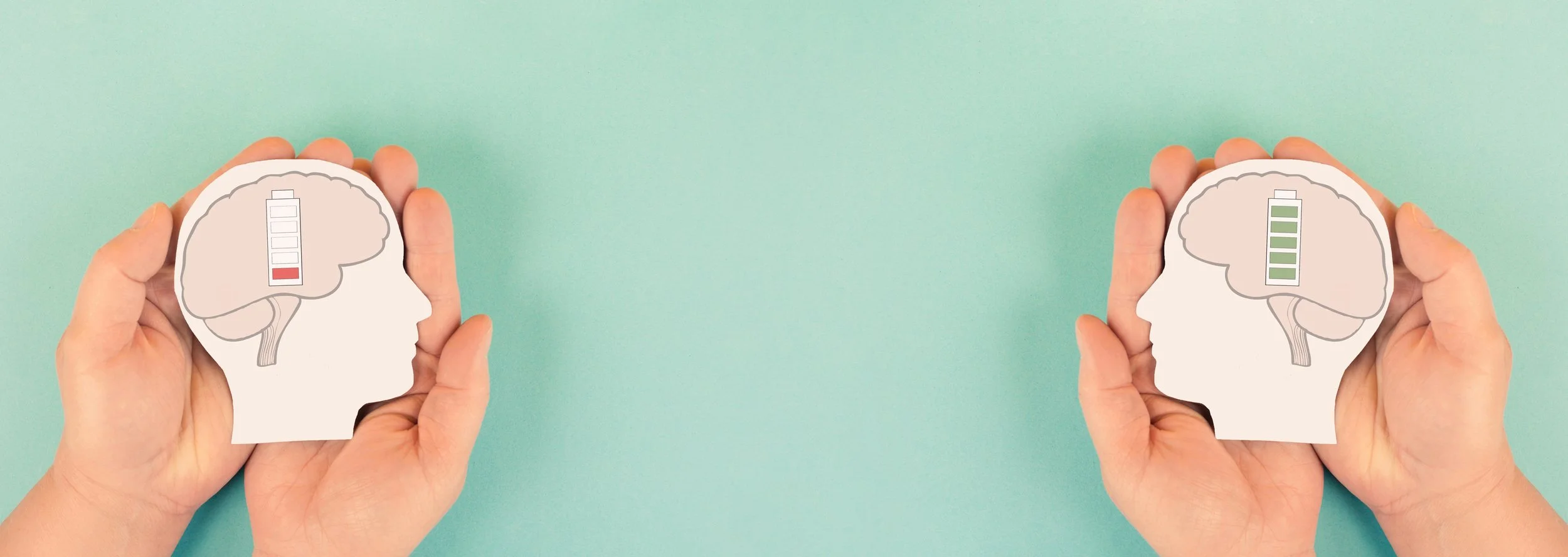
Think of your brain’s resources like a smartphone.
It’s a bit like your physical energy budget, only much harder to notice (until it’s too late).
You start the day with 100% brain energy (if you’re lucky).
But some things drain that battery faster (and are harder to notice) than others.
A difficult conversation at work uses up 20 per cent.
Dealing with family illness swallows up another 40 per cent.
By 4 PM, you’d be staring in horror at that little red 5% bar, except it hasn’t sunk in yet.
The Barrier
You receive an ‘urgent update’ on something really important in your email or the post.
The Result
You see the length, your brain battery says, “I do not have enough energy for this.”
You swipe it away without ever knowing if there was something important inside.
Our Solution
Always start with a box which spells out: ‘The Key Takeaway’.
The Change
At the very top of every single thing you send out, put a clear box.
It says: If you only read one thing, read this:
We are changing our opening hours on Mondays.
You don't need to do anything else
You’ve given them the ‘win’ without letting their mental battery die.
Why This Matters
Accessibility usually asks: ‘Can they read it?’
We think the very next question should be:
‘Can they bear to deal with it?’
Whether someone is dealing with a diagnosed psychological condition or just the heavy weight of personal loss, exam stress, or daily burnout, they deserve communications that don't make their life harder.
At IC Works, we believe communication is a social imperative. It has to work for everyone - especially the people who are currently feeling overwhelmed because life is just a bit too much for them right now.
Is your communication strategy leaving these ‘invisible’ users behind?
Let’s change the way we work together
Contact IC Works today to learn how we can make your communications work for the real world - not just the ‘good days’.